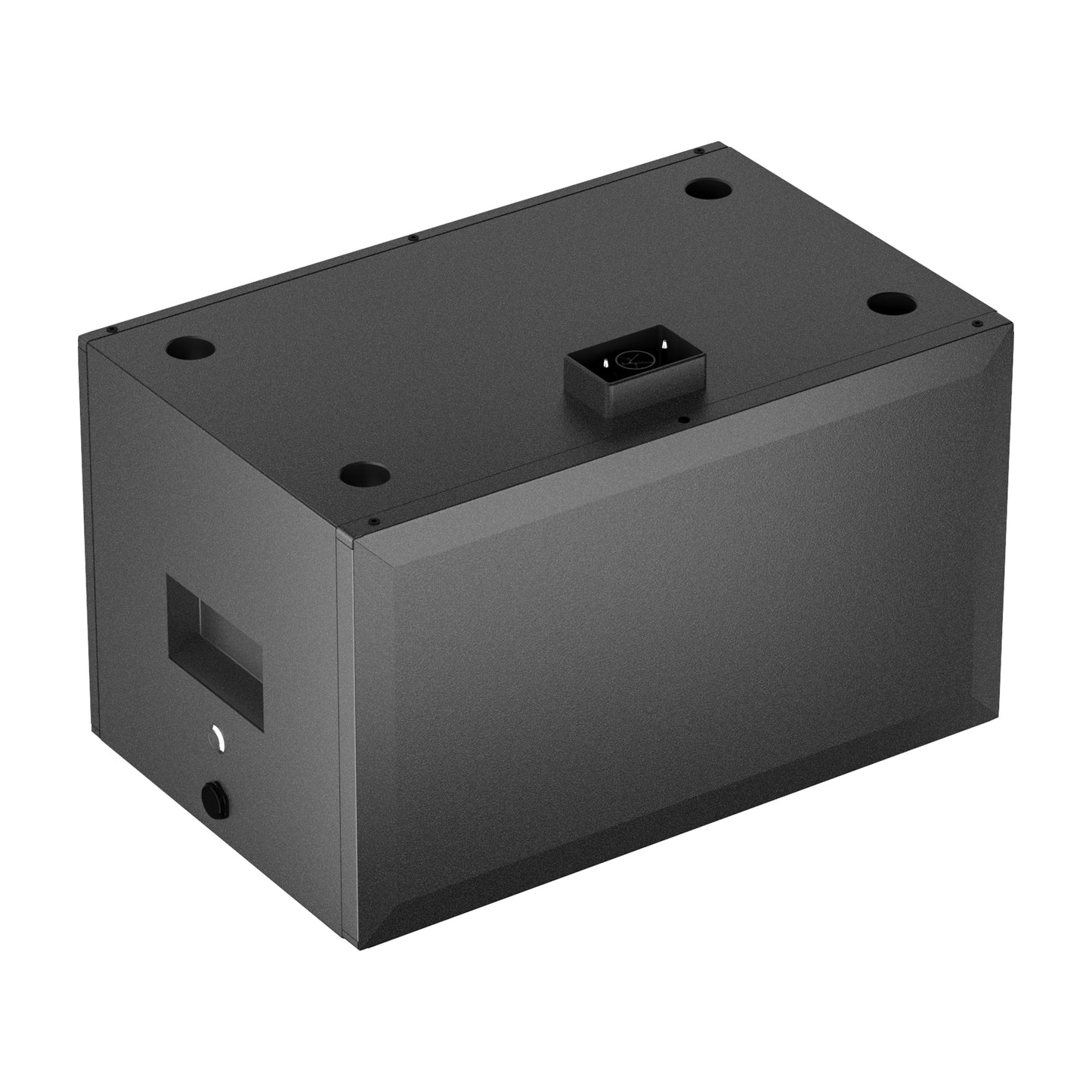
Sunpura S2400 Modular home battery storage

Store solar energy or charge from the grid using supported schedules. Choose 2.4 to 9.6 kWh to suit your electricity use and available charging windows.

Will S2400 fit my home?

Check your existing solar PV system, CT/metering solution and installation together. Tariff automation depends on the supported supplier and system. This page does not imply that any standard socket, export payment or automatic tariff integration will work in every installation.

Regular price £701.00
Sale price £701.00 Regular price £877.00
Sale Sold out
Tax included. Shipping calculated at checkout.

Low stock

Expandable capacity
2.4–9.6 kWh
Direct solar input
2 × 1000 Wp
Max. AC output · off-grid
2400 W*
LiFePO₄ · charge cycles
8,000

* 800 W nominal AC output on-grid · up to 2400 W from the separate off-grid output.

Power and solar inputs

800 W is the rated on-grid output. On-grid operation up to 2,400 W requires suitable connection and installation conditions; the separate off-grid output provides up to 2,400 W. This does not mean the system will automatically power your entire home during a power cut.

2 independent MPPT inputs, each supporting up to 1,000 Wp, 16 A maximum input current and a 10–100 V MPPT operating voltage range. The voltage range is not the start-up voltage.

Cycle count is based on the test conditions in the product specification. Actual service life depends on use and operating conditions.

Choose your capacity

Every configuration includes 1 × A2400

Which capacity do I need?

Use your evening and overnight electricity use, together with the solar surplus or charging window available to you, as your guide. Adding B2400 modules increases storage capacity, not automatically the output power. Every configuration includes 1 × A2400.

Choose solar panel kit
Optional accessories 0 selected · £0.00

You can also add a P1 Meter, Smart Plugs or other products to your order.

View full details
Sunpura S2400 home battery on a balcony with solar panels

S2400. Home battery storage for your home.

Expandable home battery storage. Connect suitable solar panels directly or add storage to an existing solar PV system through AC coupling.

Sunpura S2400 – key product benefits at a glance

Which S2400 setup fits your home?

Add battery storage to an existing solar PV system or connect compatible new solar panels directly: compare the two S2400 connection routes.

Connect solar panels directly to S2400

Compatible new or additional solar panels feed DC power directly into the two S2400 MPPT inputs, so those panels do not need a separate PV inverter between the panels and battery.

S2400 also connects on the AC side of the home energy system so stored energy can be used by household loads within the supported operating configuration.

Panel voltage, current and connectors must match the PV-input limits. The AC connection must meet the requirements of the installation and local grid rules.

Independent PV inputs
2 MPPTTwo MPPT trackers manage the connected PV inputs independently.
Direkter PV-Eingang
2 × 1.000 WpUp to 1,000 Wp per input, 2,000 Wp total direct PV input. Actual solar power depends on the panels and conditions.
MPPT-Arbeitsbereich
10–100 VConnected panel voltage must stay within the specified operating range; the value shown is not a separately confirmed start-up voltage.
Max. PV-Eingangsstrom
2 × 16 AMaximum 16 A per input. The per-input current limit still applies when panels are connected in parallel.

Maximum PV input voltage is 100 V. The array open-circuit voltage must remain below this limit after cold-weather correction; use the panel datasheet and temperature coefficient when designing the string.

Keep your existing solar inverter

Your existing solar panels remain connected to the current PV inverter. S2400 is added on the AC side of the home energy system, so the existing array does not need to be moved to the S2400 MPPT inputs.

A compatible metering solution measures household import and export. Supported operating modes can then use that data to control charging and discharge behaviour.

AC coupling does not mean direct communication with every third-party inverter. Do not connect an inverter AC output or an existing high-voltage PV string to the S2400 MPPT inputs.

The metering solution is part of the system design

Review the metering solution, existing solar PV and grid connection with the installer. Suitability depends on the actual installation and applicable UK connection requirements.

800 W or 2,400 W? The operating mode and connection matter.

On-grid AC output · rated
800 WThis is the rated on-grid AC output; it is not the same as the direct PV input rating.
Bidirektionale AC-Hardware
Bis zu 2.400 WThis is the maximum hardware capability for AC charging/discharging. Usable power depends on the market, firmware, connection and installation conditions.
Separater Off-Grid-Ausgang
2.400 WSupplies suitable loads connected to the off-grid output when the grid is unavailable; this is not automatic whole-home backup.

Higher on-grid power is not a blanket claim for operation from any household socket. Confirm product availability, settings, electrical installation and UK grid-connection requirements; a dedicated circuit alone does not authorise a higher export/output level.

Can direct PV input and existing solar PV be used in the same home?

Yes. Compatible panels can use the S2400 direct PV inputs while an existing solar PV system continues to operate through its own inverter on the AC side.

Do not add the DC panel rating and AC power as if they were a guaranteed simultaneous battery-charging figure. Solar generation, household demand, state of charge and operating conditions determine how much energy can actually be stored.

S2400. Storage that grows with your needs.

Start with the capacity that suits you today and add more solar storage later. S2400 combines one A2400 unit with one to four B2400 battery modules — from 2.4 to 9.6 kWh nominal capacity per system.

Sunpura S2400 with modular B2400 battery storage
S2400 with A2400 power unit and B2400 battery modules. Example configuration shown.

2.4–9.6 kWh

Nominal capacity per S2400 system

One system. Expandable in 2.4 kWh steps.

Each B2400 module adds 2.4 kWh of storage. Within the four-module limit, your existing A2400 remains part of the system — you do not need a second complete base unit simply to add capacity.

Battery modules and total capacity
BatteriemoduleNominal capacity
1 × B24002.4 kWh
2 × B24004.8 kWh
3 × B24007.2 kWh
4 × B24009.6 kWh

Every configuration also includes 1 × A2400. The bars compare nominal capacities; they do not show current state of charge.

Control and inverter unit
1 × A2400The shared unit for one S2400 system with up to four B2400 modules.
Pro B2400-Batteriemodul
2.4 kWhAdditional nominal capacity per module. B2400 requires a compatible A2400 unit and cannot operate on its own.
When expanding later
Add B2400 modulesStored energy capacity increases. The output power of a single S2400 unit does not increase.
Is the full 9.6 kWh usable?

9.6 kWh is the nominal capacity of four B2400 modules. The energy actually delivered to appliances or the home supply depends on factors including state of charge, configured reserves, conversion losses, temperature and battery ageing.

Nominal capacity therefore does not guarantee that a specific household load can be supplied for a fixed number of hours.

How can I plan for future expansion?

One S2400 system can be expanded with up to four B2400 modules for a nominal capacity of 9.6 kWh. The existing A2400 unit remains in place.

For larger installations, up to three complete S2400 systems can operate in wireless parallel. With a compatible parallel box, up to six S2400 systems can be connected together.

The connection, phase arrangement, firmware and required accessories must match the planned system configuration. Expansion should follow the current installation instructions.

How much space does S2400 need?

According to the product datasheet, the 2.4 kWh base configuration measures 450 × 430 × 285 mm (W × H × D). Additional battery modules increase the overall system height.

Product dimensions are not installation clearances. Check the footprint, load-bearing capacity, access and required clearances for your chosen configuration against the current installation instructions.

Which capacity suits your everyday use?

Compare your evening and overnight electricity use with the energy regularly available for charging.

Estimate your storage needs

What size home battery suits your routine?

Compare your evening and overnight electricity use with the energy regularly available for charging. A larger battery is most useful when you can also charge that extra capacity and use the stored energy later.

Consumption outside solar-generation hours

Look at a typical evening and the following night. Annual consumption alone does not show when you need electricity.

Energy available for charging

With solar, use the surplus left after direct household consumption. With grid charging, consider the available time window and the charging power your installation can support.

Capacity and power

kWh describes how much energy is stored. Simultaneous loads and connection power must also be suitable – including for an EV or heat pump.

Compare all four nominal capacities with your consumption and charging data. The interactive comparison is available when JavaScript is enabled.

  • 2.4 kWh · 1 × A2400 + 1 × B2400
  • 4.8 kWh · 1 × A2400 + 2 × B2400
  • 7.2 kWh · 1 × A2400 + 3 × B2400
  • 9.6 kWh · 1 × A2400 + 4 × B2400
How should you interpret this comparison?

The comparison uses your selected nominal capacity and the two values you enter. It does not round up to a supposedly “right” battery size or simulate a charging profile.

Actual usable energy, charging and discharging losses, reserves, timing overlaps, seasonal differences and power limits are not calculated. Repeat the comparison for typical summer and winter days. Real meter data and your specific installation are what matter for sizing.

Choose your configuration deliberately

Take your sizing assumptions into the product selector. If you are unsure, review your consumption, charging source and connection together before choosing a configuration.

Store energy. Use it at the right time.

S2400 can store solar energy for later and schedule charging from the grid. Whether home battery storage makes financial sense depends on your electricity use, tariff and storage losses.

Solar generation and household use through the day
Solar generationHousehold electricity use
01Charge from surplus solar02Use stored electricity

Illustrative daily profile. Not measured data, live prices or a savings forecast. The time windows and curves are for explanation only.

Store at midday. Use it later.

If your solar panels generate more electricity than your home needs at that moment, S2400 can store the surplus. The stored energy can then supply your household loads later, within the available capacity and power limits.

What matters is the value of the grid electricity you avoid later compared with the value of exporting the surplus — after storage losses.

An example electricity price profile
Variabler Bezugspreis
01Cheaper charging window02Avoid later grid import

Illustrative daily profile. Not measured data, live prices or a savings forecast. The time windows and curves are for explanation only.

Charge when your tariff is cheaper.

With time-of-use or dynamic electricity tariffs, you can shift charging into cheaper periods and use the stored electricity later. The price spread still needs to cover storage losses.

Compare your full variable import prices. A low wholesale price alone does not necessarily mean a low retail electricity price.

Set your own charging times with S2400.

In Customised mode, you set charging and discharging times, power and state-of-charge limits in the Sunpura app. Load-following control requires suitable meter data; AI Smart can also use available forecasts and dynamic price data.

Explore smart control
How is this calculated — and what is missing for a payback estimate?

Charging energy = 100 kWh ÷ (assumed efficiency ÷ 100). Variable energy-cost difference = 100 kWh × later import price − charging energy × charging price or foregone export value. Negative charging prices or export values remain in the calculation.

A payback calculation would also need the amount of energy actually shifted each year, the prices that apply at those times, seasonal use, all purchase and operating costs, and battery ageing. A single daily value or nominal capacity is not enough. Solar-storage and grid-charging benefits must not be counted twice for the same energy.

Your S2400. Your way to control it.

Manage self-consumption, set charging times or integrate individual appliances: the Sunpura app combines your settings with available energy data. Choose how you want to use your S2400 home battery.

Use solar energy in line with household demand.

In Self-Consumption mode, S2400 uses data from a suitable metering solution to align charging and discharging with your household energy demand.

Regelung
Store available surplus solar energy and use the stored energy later for your own household consumption.
Voraussetzung
A compatible metering source that reliably measures household import and export.
Grenzen
State of charge, connection type and available power limit the control response. This does not imply guaranteed zero export.

Set charging times and limits yourself.

In Customized mode, you set charging and discharging times yourself. This also provides a way to use S2400 deliberately when whole-home meter data is not available.

Time windows
Plan charging and discharging around your routine or your electricity tariff's time windows.
Power and state of charge
Set supported power limits in W and state-of-charge limits in %. State of charge is also shown as SOC in the app.
Without whole-home metering
A schedule is not the same as precise control based on the home's actual net consumption.

Use more data in your charging plan.

AI Smart uses available household data, PV and weather forecasts, state of charge and dynamic electricity-price data to create charging and discharging schedules.

Datengrundlage
Current measurements and any forecast and tariff data available for your region and configuration.
Your settings
Planning takes your permitted state-of-charge and power limits into account.
Check first
Metering source, tariff-data source, app and firmware must support the function you want to use. Not every electricity tariff is connected automatically.

Bring an individual appliance into your energy plan.

A compatible Smart Plug measures and controls a connected appliance. When assigned to the battery location, its demand can be used by supported control functions.

Anwendung
Measure the consumption of one connected appliance and use supported switching functions.
Voraussetzung
A compatible, correctly assigned Smart Plug and an appliance within the plug's electrical ratings.
Einordnung
Optional accessory for individual loads. It does not replace whole-home metering and is not a required adaptor between S2400 and the wall socket.

The right metering data makes the difference.

Consumption-led control requires reliable whole-home data. Your app settings determine how those data are used.

Passende Messquelle
Import and export data
S2400-System
Mode and limits
Your app settings

Schematic information flow for consumption-led control. This is not an electrical wiring diagram or a promise that all data processing is purely local.

Which metering solution suits your home?

For the UK, check a suitable Smart Meter or CT solution for your household supply. Your energy supplier's smart meter is not automatically a data source for S2400. Compatibility with a time-of-use tariff must also be checked separately.

P1 readers, Smart Meters and wireless CT solutions are different ways to measure energy flow. They do not normally all need to be installed together. Work inside the consumer unit should be carried out by a competent person.

Check connection and installation
Does S2400 work without a Smart Meter?

Yes. Direct PV charging, the separate off-grid output and Customized schedules are all possible ways to use S2400. Without suitable metering data, S2400 normally cannot follow the whole home's net consumption precisely. To discharge deliberately in the evening, set the appropriate mode or schedule.

Do I need a second meter if I already have a P1 reader?

Not necessarily. If your existing metering source is compatible, can be read reliably by the Sunpura app and captures the required energy flow, a second meter is not needed simply to duplicate the same data. For third-party readers such as HomeWizard, check current firmware, account region and app support.

What should I check about connectivity, offline operation and integrations?

During P1 Meter setup, the instructions require the smartphone to connect to a 2.4 GHz Wi-Fi network. After setup, check that measurements continue to update. This requirement applies to that setup process and is not a general wireless specification for every accessory variant.

The app, cloud functions and external forecast or tariff data have different connectivity requirements. Fully local control or Home Assistant integration is not promised here. Confirm any required third-party integration and behaviour during loss of connectivity for your specific setup.

Plan the connection before delivery.

Prepare these details for your installer or our team.
Electrical connection per S2400
1 Phase

Can also be used in a three-phase home. Each unit is connected to one phase.

Standard rated on-grid output
800 W

The permitted setting also depends on the connection, configuration and local requirements.

Maximum AC hardware power
2.400 W

Higher settings require a suitable connection and correctly designed installation.

  1. Choose the installation location

    Confirm space, access and environmental conditions before delivery.

    What is included?

    Prepare a stable, level installation location and a clear route for moving the units. Allow access to connections and follow the clearances and environmental conditions in the latest manual.

    The modules are heavy; arrange suitable help for moving them. IP65 does not replace the location and weather-protection requirements in the manual.

  2. Check the electrical connection

    Have the circuit, protection and phase allocation checked for the intended use.

    What is included?

    Where necessary, a qualified installer should check the socket, earthing, protective devices, cable and circuit. Work in the consumer unit, fixed wiring, new circuits and the allocation of multiple systems should be carried out by a competent person.

    A higher power setting in the app does not make an unsuitable connection compliant. Do not place multiple units on the same circuit without proper planning.

  3. Messung zuordnen

    Choose the suitable metering source and operating mode.

    What is included?

    For control based on household consumption, use a compatible P1, Smart Meter or CT metering solution. Installation of a Smart Meter or CT in the consumer unit should be planned with a qualified installer.

    Without suitable whole-home metering, you can still use your own charging and discharging schedules. This does not provide precise control based on the home's net consumption.

  4. Commission the system

    After the planned connection is complete, check settings and system behaviour.

    What is included?

    Set up the system in line with the manual. In the app, check detected battery modules, state of charge, metering source, operating mode and schedule.

    Confirm that charging and discharging match the plan. Complete any required DNO processes or registrations; do not change country or power limits to bypass connection requirements.

Three-phase home? One unit can still be enough.

A single S2400 can be used in a three-phase home. It physically charges and discharges on the phase to which it is connected. A suitable metering solution can also measure whole-home energy flow for control.

Messung
Depending on the metering solution: whole-home data
Einzelner S2400
Physical charging and discharging connection on one phase

Three-phase meter data does not mean one unit supplies power on all three phases at the same time. Supplying separate phases or using multiple S2400 units requires appropriate system planning.

Have these details ready for the connection check.

This information helps when speaking with a qualified installer or our team. Do not open electrical covers or take measurements on live components.

  • S2400 model and planned battery capacity.
  • Existing solar PV: inverter model and connection type, if known.
  • Electricity meter model and any existing P1 reader, Smart Meter or CT.
  • Known single- or three-phase supply and intended use.
  • Delivery country and any questions about timing, self-consumption or later expansion.
How can I plan for future expansion?
Metering for household energy flow
The following is a general planning aid. Final connection requirements depend on your property, network operator and installation. Electrical work should be carried out by a competent person where required.
P1 Meter, Smart Meter or CT solution depending on meter, market and installation.

Power when the grid is down. Protection for everyday use.

The S2400's separate off-grid output can power suitable individual appliances from stored energy. LiFePO₄ cells and integrated protection features support everyday battery operation.

What can you power when the grid is down?

Maximum AC output · off-grid
2.400 W

At the separate off-grid output for suitable appliances.

Peak power · up to 5 seconds
3.600 W

Short-duration peak power, not continuous output.

On-grid: 800 W rated AC output in the standard configuration. Off-grid output power is not power exported into the household grid.

Three checks for the appliances you want to run.

  • Leistungsbedarf zusammenrechnen

    Check the power draw of all appliances connected at the same time. The total must remain within the permitted output power.

  • Allow for start-up power

    Motors and compressors can require significantly more power when starting. Check their start-up demand and duration; the 5-second peak rating is not a blanket guarantee that every appliance will start.

  • Energiereserve einplanen

    Runtime depends on battery capacity, state of charge, load and system losses. A larger battery can extend runtime but does not increase output power.

Protection at multiple levels.

From cell chemistry to enclosure protection, S2400 combines durable battery cells with monitoring and integrated protection features.

8.000Cycle life · manufacturer specification

LiFePO₄ cells. Actual service life depends on use and operating conditions.

LiFePO₄Cells designed for everyday energy storage

S2400 uses lithium iron phosphate (LiFePO₄) cells. The manufacturer's cycle-life specification is 8,000 cycles.

This is not a guaranteed number of cycles under all conditions. Use and operating conditions affect actual service life; a cycle-life specification is not a warranty period.

BMSMonitor battery condition

The battery management system monitors operation. Integrated protection features include overvoltage, overcurrent, short-circuit and critical-temperature protection.

Correct connection and the operating conditions in the manual remain essential.

IP65Protected enclosure

The S2400 enclosure is rated IP65. Choose the installation location and weather protection in line with the latest manual.

IP65 does not mean the unit can be submerged and does not replace required clearances or suitable environmental conditions.

AerosolIntegrated fire suppression

An integrated aerosol system adds a further layer of fire-suppression protection.

Even with integrated protection features, installation, use and maintenance must follow the manual. These features do not mean there is zero fire risk.

Warranty and support for your S2400.

From the right manual to a technical enquiry, find the documentation and contact routes for your Sunpura S2400 here.

10year warranty

For your S2400.

Eligible S2400 products are covered by a 10-year warranty in accordance with the applicable warranty terms. Keep your proof of purchase and serial number.

Garantiebedingungen anfragen

Manuals & technical data

Review connection, operation and product specifications in the relevant S2400 documentation.

Open documentation

Technical questions & support

Questions about operation, an app message or a possible fault? Describe the issue directly to technical support.

The right details make your request easier to resolve.

Have this information ready so we can identify your S2400 and the affected configuration.

Product & purchase
S2400 configuration, serial number and invoice or other valid proof of purchase.
Fault symptoms & timing
What happens, when did it start and under what conditions? Add any messages, photos or videos you have.
App & connection
App and firmware version, connection type, and meter or accessory configuration, if known.
Technischen Service kontaktieren

Opens your email app. You can add photos and documents there.

Which documents are important for warranty support?

Keep your invoice or other valid proof of purchase, the serial number and the warranty terms that applied to your purchase. The warranty start date, scope and conditions are governed by those documents.

A battery cycle-life specification is not an additional warranty period. For questions about your specific purchase, ask Support for the applicable warranty terms.

What happens if my S2400 develops a fault?

Support will first review the fault description and information you provide. Depending on the diagnosis and applicable terms, the next step may involve further checks, repair or replacement.

Agree any return shipment with the responsible service team before sending the product. The return method and any applicable costs will be confirmed for the specific case.

Bought from a retailer: who should I contact?

For questions about a purchase, return or refund, contact the seller you actually bought from. For technical product questions, Sunpura Support can assist; please also provide the seller details and proof of purchase.

Questions about the electrical installation should be addressed to the installer who carried out the work.

What comes with your S2400?

A complete S2400 system consists of one A2400 unit plus the B2400 battery modules for your chosen capacity. Cables, mounting accessories and product documentation complete the package.

Illustration: S2400 with one A2400 unit and one B2400 module. The table shows the other capacity configurations.
Modules in each complete system
CapacityA2400B2400
2.4 kWh11
4.8 kWh12
7.2 kWh13
9.6 kWh14

Per complete S2400 system. Additional individual modules and multiple complete systems should be considered separately.

Your selected bundle is what counts.

Whether solar panels, a P1 Reader, Smart Meter or Smart Plugs are included depends on the bundle you select and any stated promotional extras. This overview does not add items to the advertised package contents.

The European standard version shown here does not include a UK 3-pin plug. Before ordering, confirm the correct connection version and included cables for the specific offer you are buying.

Cables, mounting accessories and documents

Allocation based on the S2400 manual. The exact screw set depends on the supplied packing list and packaging version.

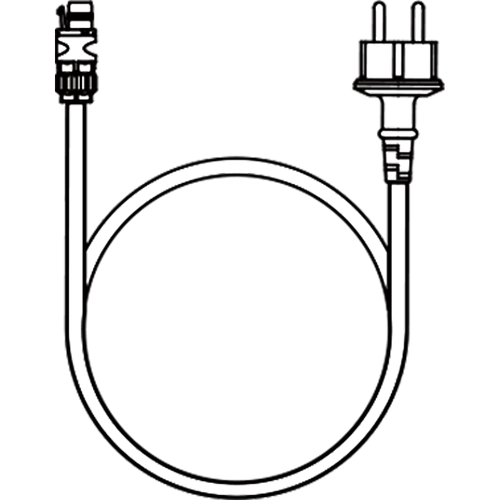
  • AC connection cable · 5 m

    AC connection cable · 5 m

    1 × in the A2400 package

  • Mounting blocks · A2400

    Mounting blocks · A2400

    2 × in the A2400 package

  • M5 × 12 Schrauben

    M5 × 12 Schrauben

    Screw sets for A2400 and B2400; quantity according to the packing list.

  • M8 × 80 Befestigungsschrauben

    M8 × 80 Befestigungsschrauben

    Part of the B2400 mounting accessories.

  • Mounting bracket · B2400

    Mounting bracket · B2400

    1 × per B2400 package

  • Mounting blocks · B2400

    Mounting blocks · B2400

    2 × per B2400 package

  • Produktunterlagen

    Produktunterlagen

    Part of the A2400 package.

S2400 documents and downloads

Manual and datasheet for planning, connection and operation. The language of each linked document is shown alongside it.

Weitere Produktunterlagen

Technical specifications. Clear by function.

Power, solar and battery specifications for the Sunpura S2400. AC charging, on-grid discharge and the separate off-grid output have different operating limits.

800 W is the rated on-grid AC output. The datasheet lists up to 2,400 W as the maximum AC hardware output. The permitted setting depends on the country, firmware, connection and correctly designed installation; it is not blanket approval for an existing wall socket.

Power & connection

On-grid AC output · rated
800 W

Standard rated value; do not confuse with maximum charging power.

On-grid AC input · maximum
2,400 W

AC charging. Connection and settings must suit the installation.

On-grid AC output · maximum
2,400 W

Hardware maximum according to the datasheet. See the on-grid power note for permitted use.

Off-grid output · maximum
2,400 W

Separate output for suitable appliances; does not automatically power all household circuits.

Off-grid peak output
3,600 W · 5 s

Short-duration peak, not continuous power.

AC coupling · maximum input
2,400 W

Follow the connection method in the manual.

AC bypass · maximum
2,400 W

Pass-through rating according to the datasheet; this does not imply guaranteed uninterrupted switchover.

AC connection
L + N + PE · 220/230 V · 50 Hz

Single-phase physical connection per S2400.

PV input & MPPT

Independent MPPT inputs
2
Direct PV input · maximum
2 × 1,000 Wp

2,000 Wp total directly at the DC inputs.

PV input current · maximum
16 A per input

Two inputs; this is not a blanket 32 A limit for a single input.

PV operating voltage
10–100 V

This range is not a separately confirmed start-up voltage.

PV input voltage · maximum
100 V

Panel open-circuit voltage, including cold-weather correction, must remain within the input limit.

PV plus microinverter · combined
Up to 4,400 Wp

Combined scenario using direct PV and AC coupling as described in the product documentation. This is not a 4,400 Wp MPPT input or guaranteed charging power.

Battery & expansion

Nominal capacity per B2400
2.4 kWh
Nominal capacity per complete system
2.4–9.6 kWh

One A2400 unit with one to four B2400 modules.

Cell chemistry
LiFePO₄

Lithium iron phosphate.

Battery nominal voltage
48 V
Maximum battery charge/discharge current
50 A

Battery-side value; not AC socket current.

Cycle life according to datasheet
8,000 cycles

To 70% SOH at 1.0 C. Manufacturer specification under stated conditions; not a guarantee of service life in years.

Depth of discharge · DoD
90%

Datasheet value. Nominal energy and actual usable AC energy are not identical.

Parallel system expansion
Up to 3 wireless · up to 6 with Parallel Box

Complete systems with compatible configuration. Allow for circuits, phases, firmware and local connection requirements.

Physical design & operation

Ingress protection
IP65

Follow installation-location requirements in the manual.

Operating temperature range
−20 to +55 °C

General operating range. Follow the separate charging and discharging requirements in the manual.

Dimensions · W × H × D
450 × 430 × 285 mm

S2400 with one A2400 unit and one B2400 module.

A2400 net weight
14.3 kg

Weight of the power and control unit.

Communication
Wi-Fi / Bluetooth
Electrical protection features
Overvoltage · overcurrent · short circuit · temperature

Integrated protection features according to the datasheet.

S2400 datasheet, DE, June 2026, supplemented by S2400 product documentation on system expansion. Values refer to the stated interface and configuration. Specifications for the specific product variant and connection conditions remain authoritative.

More questions about S2400?

Key answers on installation, existing solar PV, power, expansion, smart control and long-term use.

Connection & power

Can I use S2400 with my existing solar PV system and inverter?

Yes. S2400 can be used as AC-coupled battery storage with an existing solar PV system. The existing PV system and inverter can generally continue to operate; S2400 does not need to communicate directly with the existing inverter.

A suitable metering source measures household energy flow and supports the corresponding battery control.

For unusual configurations, direct device or inverter compatibility should be checked separately.

Do I need an electrician to install S2400?

A straightforward S2400 installation can be plug-and-play under suitable conditions. Some work should, however, be carried out or checked by a qualified electrician.

This particularly includes Smart Meter or CT work in the consumer unit, a dedicated circuit, higher on-grid power settings, three-phase system distribution, and checks of earthing, RCD protection, circuit protection and cable sizing.

Exact requirements depend on the household installation and applicable local rules.

What do 800 W and up to 2,400 W mean for S2400?

The figures describe different operating limits:

  • 800 W: rated output in normal on-grid operation.
  • up to 2,400 W: maximum on-grid AC output under suitable installation conditions.
  • 2,400 W: maximum off-grid AC output.
  • 3,600 W for 5 seconds: short-duration peak power.

2,400 W should therefore not be understood as continuous power available from every standard wall socket.

The permitted on-grid power depends on connection type, installation and local requirements.

Can I use S2400 in a three-phase home?

Yes. A single S2400 can be used in a three-phase home. The unit is electrically connected to one of the household phases.

With a suitable metering solution, the system can use relevant whole-home energy data. The individual S2400 unit still physically charges and discharges on the phase to which it is connected.

A single S2400 is not a native three-phase AC output.

Storage & control

How much storage capacity can I build – and does adding B2400 modules also increase power?

A single S2400 system can be configured from 2.4 to 9.6 kWh:

  • 2.4 kWh: A2400 + 1 × B2400
  • 4.8 kWh: A2400 + 2 × B2400
  • 7.2 kWh: A2400 + 3 × B2400
  • 9.6 kWh: A2400 + 4 × B2400

Additional B2400 modules increase storage capacity but do not automatically increase the supported power of the S2400 unit. More system power is added by using additional complete S2400 units.

Does S2400 work without a Smart Meter or meter reader?

Yes. S2400 can operate without whole-home metering, for example with direct PV charging, the off-grid output or supported manual schedules.

Without a suitable metering source, however, the system cannot track the home's actual import, export and net consumption as precisely. Functions such as Self-Consumption and supported smart control therefore benefit from an appropriate metering solution.

In the UK, whole-home metering is typically implemented using a CT or compatible Smart Meter solution suited to the household installation.

Can S2400 charge without solar or use cheaper electricity tariffs?

Yes. S2400 can also operate as AC-coupled battery storage without new solar panels connected directly to the MPPT inputs.

Supported manual schedules and available Smart Energy functions can align charging and discharging with your routine or suitable time-of-use electricity tariffs.

Where supported, dynamic tariff data together with available consumption, PV and forecast data can be used by the control system.

Tariff data, automation and AI functions can vary by market, provider, app version, firmware and metering source.

How far can I expand my S2400 system later?

You can start with one S2400 system and add further complete S2400 units later. This can increase both storage capacity and available system power.

Up to three complete S2400-family units can also operate in parallel within the intended architecture without a GB-22. The GB-22 GridBox can nevertheless be part of a professionally planned installation with two or three units.

For larger on-grid parallel architectures, GB-22 supports up to six Sunpura battery units and single- or three-phase systems.

The phase allocation, circuit capacity and permitted system power must suit the specific installation.

Operation & service

What happens during a power cut?

S2400 has a separate off-grid output with up to 2,400 W AC output and a short 3,600 W peak for 5 seconds.

With a suitable system configuration, selected appliances can be powered from this output. These ratings do not mean the whole home will automatically continue to run or that switchover is uninterrupted.

Which appliances can be powered and how switchover works depend on the system topology and installation.

How long does the battery last – and what do 8,000 cycles and a 10-year warranty mean?

The B2400 battery is specified for 8,000 charge cycles to 70% State of Health at 1.0 C. This cycle-life figure is a technical specification and should not be converted into a guaranteed service life in years.

The S2400 system has a 10-year warranty in accordance with the applicable warranty terms and conditions.

Actual ageing depends on factors including temperature, use, charging profile and operating conditions.

Can S2400 be installed outdoors?

S2400 is rated IP65. This means protection against dust and water jets, but it is not blanket approval for every exposed outdoor location.

Installation location, temperature range, ventilation, mechanical protection and the requirements in the installation documentation still need to be followed.

Why are the A2400 and B2400 separate modules?

S2400 separates the A2400 power and control unit from the B2400 battery modules. This modular design makes capacity expansion easier and can support more targeted diagnosis, maintenance and component-level service.

The repair or replacement needed in a specific service case depends on the fault, diagnosis and warranty terms.

Need help checking the final detail?

Use our product documentation or contact Sunpura Support if your household installation or system configuration is not covered here.